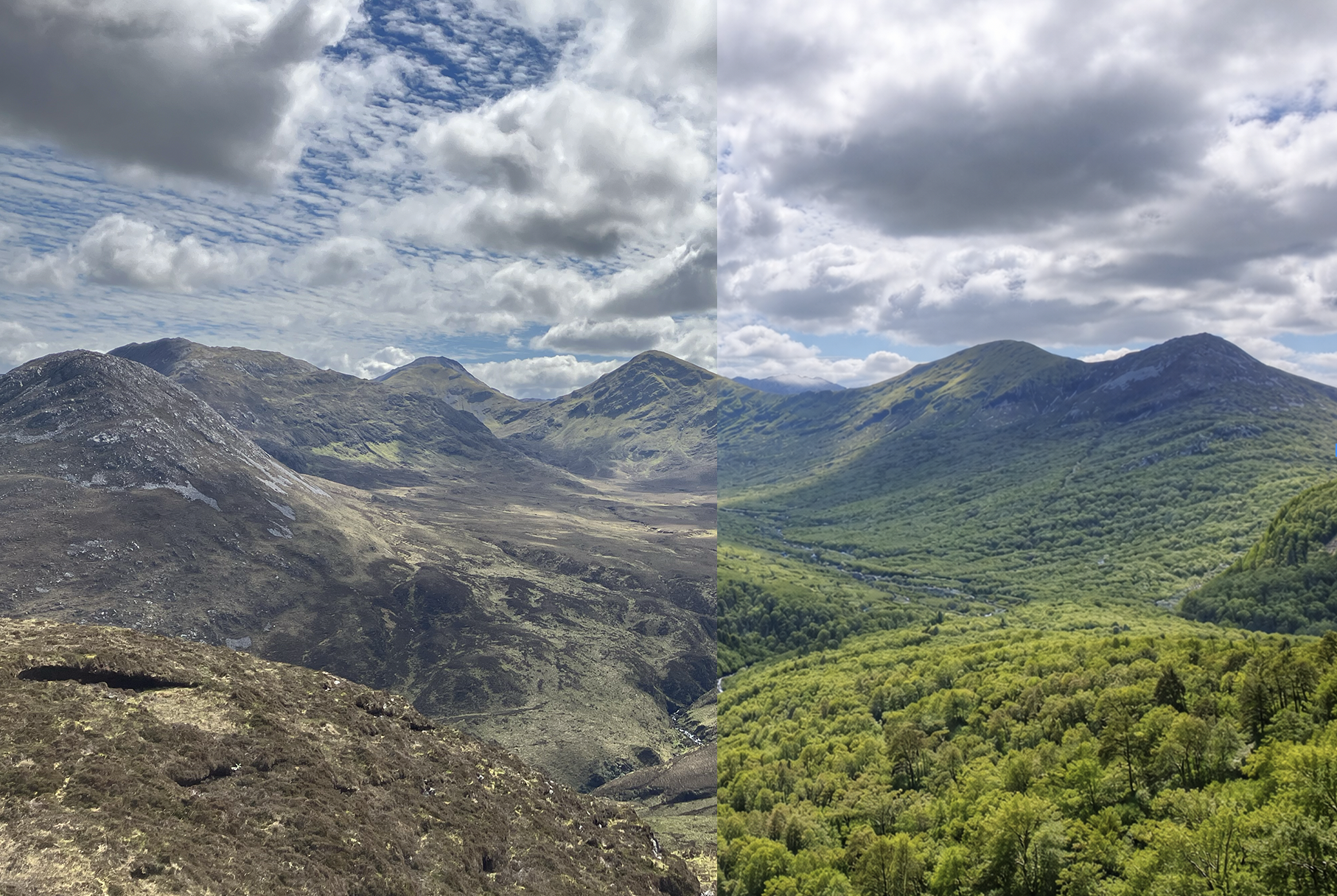
Once Bare, Now Thriving
Witness the Forests Return
Today, only 1–2% of Ireland is covered by healthy native woodlands. In a country that was once blanketed in forest — including temperate Atlantic rainforest, one of the rarest and most beautiful habitats in Europe — this loss is not only heartbreaking, it is threatening life as we know it. The health of humans and the health of biodiverse forests are intrinsically linked.
We aim to bring back Connemara’s native forest cover. Through a combination of grazing limitations, the careful reintroduction of predators such as lynx, and guided, expert-led replanting, Connemara’s forests are once again beginning to expand, climbing further and further up the hills and mountains. Plantations of non-native conifers are being carefully removed and replaced with diverse native woodland, with no clear-felling permitted within the park.
Nothing has gone to waste: the felled plantation trees have been repurposed into cabins, bothies, signposts, and other infrastructure, ensuring that even their removal contributes to a more sustainable and imaginative future.
Connemara’s mountains are once more cloaked in green — not in uniform plantation rows, but in living, breathing forests that echo the wild richness of Ireland’s past and promise a more resilient future.
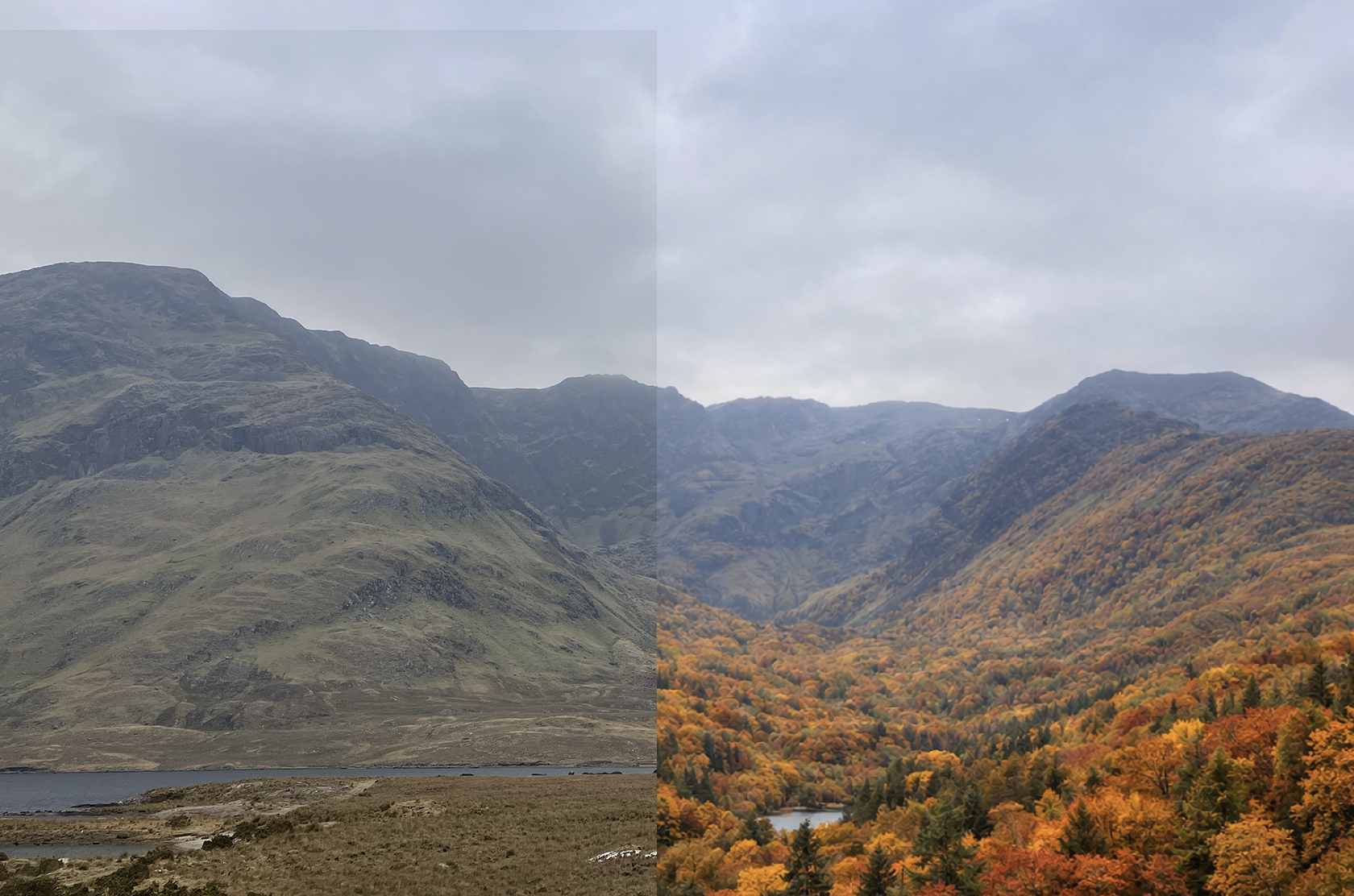
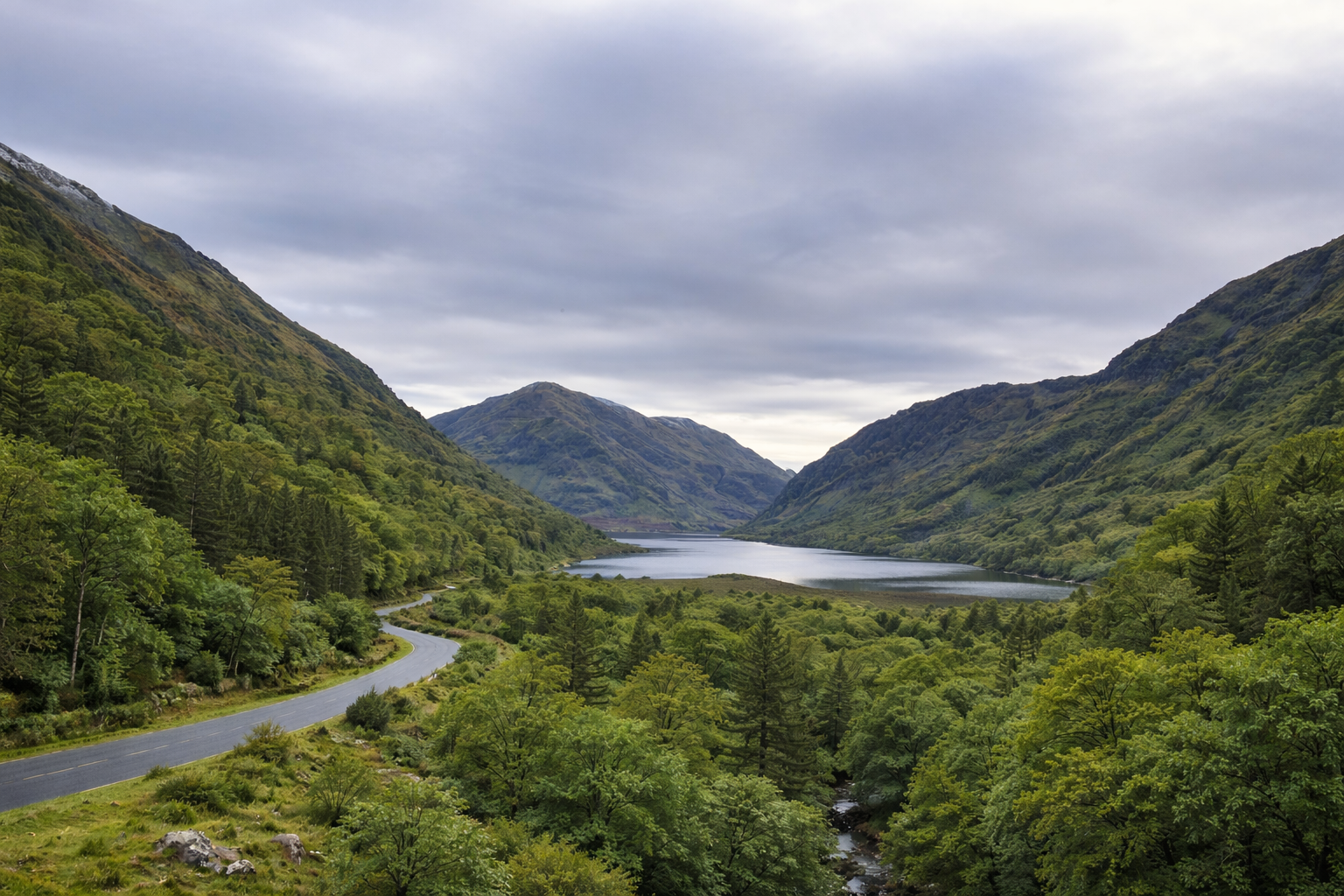
The old woods have found their way back into Doolough Valley. Native trees once more line the slopes and trace the edges of the water, knitting the land together as they would have done long ago. With them has come the quiet return of birds, insects and small mammals, settling into a place that feels whole again.
What was once open and exposed is now alive — a refuge for wildlife, and a richer, more intimate landscape for anyone who walks it.